- Get a free quote — honest pricing including the access costs Panorama's slopes actually require
- UV-resistant specification for the west and north elevations that fade first
- Working across Panorama, about 11 km from our base in Royal Ascot
Painting in Panorama
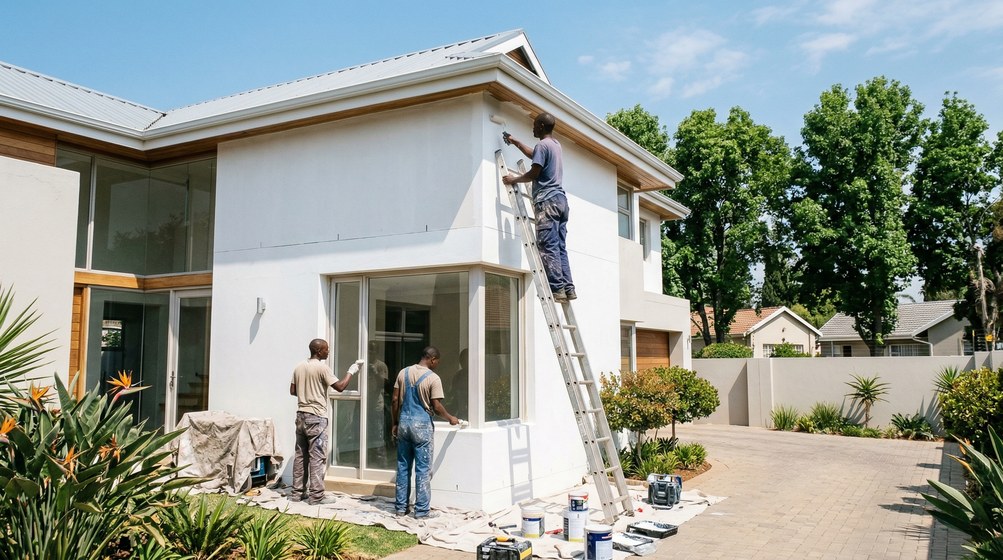
Panorama runs up the western slopes of the Tygerberg, and the topography is the single biggest influence on what painting costs here. Split-level homes, houses built into a fall, steep driveways, retaining walls and double-storey elevations that are effectively three storeys on the downhill side all make access harder and slower than on flat ground.
The second influence is exposure. Elevated west-facing walls in Panorama take full afternoon sun with nothing in the way, and the UV load on those elevations is markedly higher than on a sheltered house down on the flats. Colour choice and product quality matter more here than in most northern suburbs.
What It Costs to Paint a House in Panorama
Panorama pricing sits above the northern suburbs average, and access is why. Expect any honest quote to itemise scaffolding or elevated work platforms separately.
| Job | Typical price in Panorama |
|---|---|
| Full interior repaint 3-4 bed home, walls and ceilings | R22 000 – R42 000 |
| Full exterior repaint single storey on level ground | R33 000 – R58 000 |
| Full exterior repaint double storey or split-level | R58 000 – R98 000 |
| Exterior walls per m² of wall area | R95 – R160 |
| Interior walls per m² of wall area | R65 – R115 |
| Access equipment scaffolding or tower hire, per project | R4 500 – R14 000 |
| Concrete tile roof coating per m², clean, prime and two coats | R85 – R150 |
| Retaining and garden walls per m², one face | R70 – R125 |
| Masonry sealer coat per m², first-time painting of bare brick | R30 – R60 |
Two Panorama houses of identical size can be R20 000 apart on exterior work purely because of the slope. A quote that does not mention how the high work will be reached has usually not been properly measured, and the cost tends to reappear later as a variation.
Ranges above are what comparable jobs in the area normally come in at, not a quote. The only way to get a real figure is to have the surfaces measured and the condition assessed on site, which is free and takes about half an hour.
When to Paint in Panorama
The two best periods for exterior work in Panorama are late September to November, and March to late April. Both give you dry, stable conditions without the heat extremes of midsummer.
December to February is workable but demanding. On an exposed west elevation the wall surface temperature in the afternoon can exceed 50°C, well above the 35°C substrate limit most manufacturers specify. Paint applied to a surface that hot flashes off before it can wet and key into the substrate, which shows up as poor adhesion, visible roller lap marks and patchy sheen. The workaround is simply to follow the shade: east elevations in the morning, south through midday, west and north late in the afternoon.
Winter is not an option for exteriors here. Beyond the rain, the elevation means overnight temperatures drop lower than down on the flats, and most acrylics stop forming a proper film below about 10°C. A coat applied on a cold June afternoon may look fine and still have no durability at all.
Choosing Paint and Colour for Panorama's Exposure
UV is the limiting factor on the exposed elevations, and colour choice affects lifespan more than most people realise. Deep charcoals, strong reds, bright blues and vivid earth tones use organic pigments that break down fastest under direct sun. On a west-facing Panorama wall a deep colour can look visibly chalked and faded in four years, while a mid-tone grey or a warm off-white on the same wall still looks acceptable at eight.
If you want a dark colour, it is worth asking for it to be tinted into a premium base with inorganic pigments and accepting a shorter cycle on that elevation. Plascon Micatex, Dulux Weatherguard and Fired Earth Severe Weather are all appropriate specifications for this exposure.
Where face brick is being painted for the first time, and a fair amount of Panorama's 1970s and 80s brickwork is, a masonry sealer or plaster primer coat is essential. Bare brick and mortar absorb at wildly different rates, and going straight in with topcoat gives you a patchy, blotchy finish that no number of additional coats will even out.
Interiors in Panorama tend toward larger volumes and double-height entrance spaces, which makes sheen consistency important. Plascon Cashmere or Dulux Luxurious Silk hold an even finish across large uninterrupted wall areas better than a budget PVA will.
Access, Retaining Walls and Slope Drainage
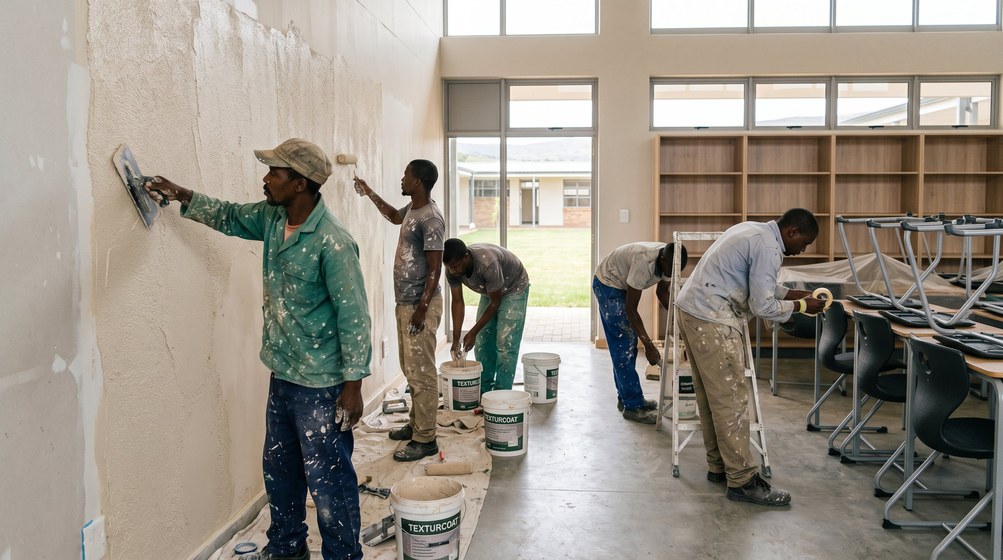
Retaining walls are a Panorama speciality and they fail in a particular way. Water in the ground behind the wall has to go somewhere, and if the weep holes are blocked or the wall was built without adequate drainage, that water passes through the structure and emerges on the visible face. Paint applied over it blisters, and the efflorescence, the white crystalline salt bloom, keeps coming back.
Painting the face of a retaining wall does not solve this and never will. The fix is on the retained side, clearing or forming weep holes and improving drainage. If that is not practical, the honest answer is to accept a shorter cycle on that wall and use a breathable mineral coating rather than a film-forming acrylic, so at least the moisture can escape without lifting the finish.
Services We Cover in Panorama
- Exterior painting
- Interior painting
- Roof painting
- Boundary wall painting
- Plaster repairs
- Colour consulting
- Spray painting
- Damp proofing
Panorama Painting Questions
Planning a repaint in Panorama? Contact Painters Royal Ascot for a free, no-obligation quote from painters who work in this area every week.
painters Panorama, double storey painting Panorama, exterior painters Panorama Cape Town, retaining wall painting, house painters Northern Suburbs
Get a Free Quote in Panorama →5-Star Reviews
Powered by leaderr